Artificial intelligence is now a routine part of litigation, but not in the way the marketing suggests. It rarely appears as a robot witness. It shows up as a transcript, a photo, a predictive score, a document summary or a chat log offered as proof of what someone said or intended. The legal question is old-fashioned: can the party offering it show that it is what they claim?
Judges in 2026 are converging on a practical answer. Existing evidence rules still govern, with authentication, hearsay, relevance and prejudice doing most of the work. What is changing is the amount of technical detail courts expect before they admit an AI-generated or AI-analysed exhibit, and how quickly parties are willing to litigate the provenance of a file.
Key facts
- Courts generally apply existing evidence rules to AI outputs rather than a separate AI statute.
- Authentication asks whether the item is what its proponent says it is, not whether the AI is accurate.
- Parties increasingly seek discovery of prompts, model versions and training data.
- Deepfake claims shift the burden to the party alleging manipulation to produce expert proof.
- Several districts have issued local standing orders or checklist-style guidance for AI-generated exhibits.
What "AI evidence" actually means in 2026
The label covers at least four different things: content generated by a model, such as an image or a voice clone; content analysed by a model, such as a facial recognition match or a document review; a model's own internal record, such as a risk score; and metadata or logs that show how a file was created. Each raises a different evidentiary question.
A generated image is offered to prove that something happened. An algorithmic score is offered to support an inference about a person. A chat log may be offered as a party admission. Treating all of these as one category leads to bad arguments. The first question in every case is what the exhibit is being used to prove, because that determines which rule the proponent must satisfy.
Authentication is the first gate
Under the federal rules and most state analogues, authentication is a low bar: the proponent must produce evidence sufficient for a reasonable jury to find that the item is what it purports to be. For a business record or a device export, a custodian can lay the foundation. For an AI-generated image, the chain is harder because the output may not correspond to any real scene.
Courts are asking for more than a screenshot. They want the original file, its hash, the platform it came from, the account that uploaded it and, where available, the prompt and model version. A party that cannot produce the underlying data may still authenticate through circumstantial evidence, but the argument becomes longer and more expensive. Practical tip: preserve the source file and its metadata at the moment you collect it, not after the other side challenges it.
Discovery: who must produce the model
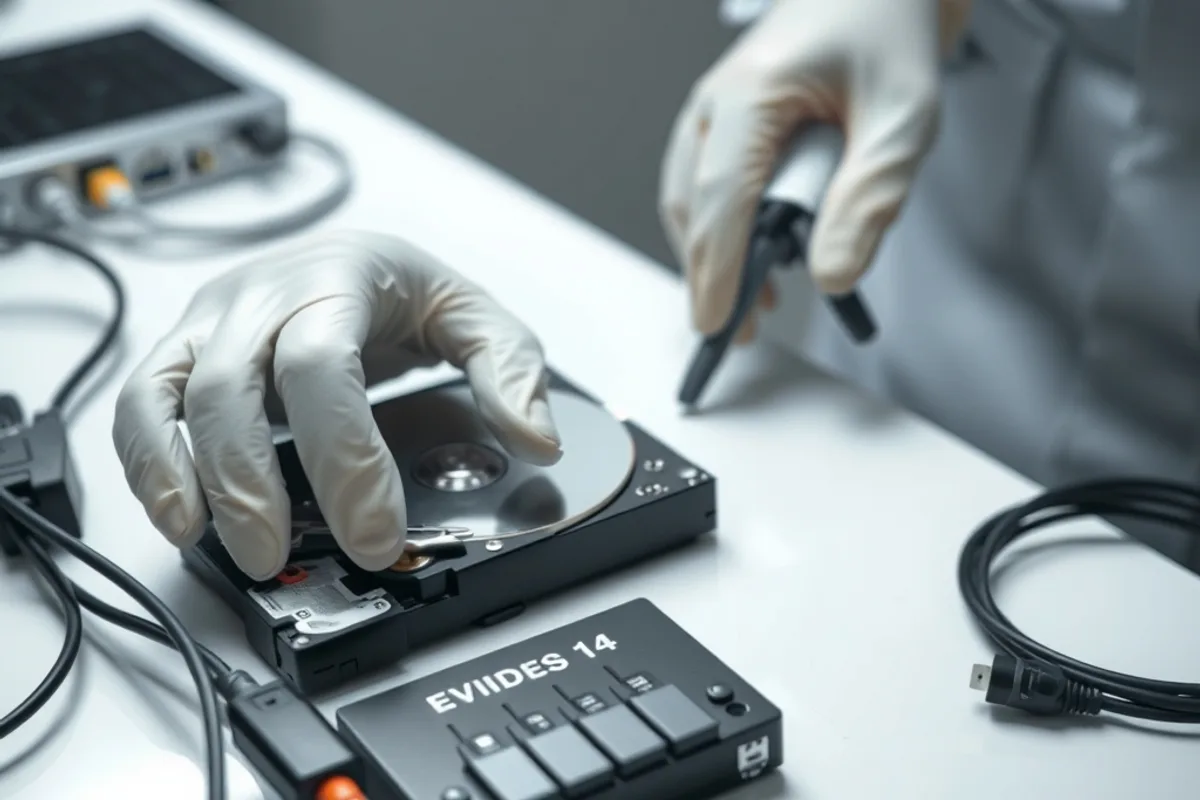
Discovery disputes in 2026 increasingly focus on inputs rather than outputs. Opposing parties ask for the prompt history, the model version, system settings and any evaluation logs. Vendors resist, citing trade secrets and confidentiality. Courts have been willing to order production under protective order, particularly where the output is central to the case and the requesting party can show that the information is not available elsewhere.
The proportionality limit still matters. A request for an entire training corpus is usually overbroad; a request for the specific inputs and version that produced the challenged output is more likely to be granted. The practical lesson for firms is to keep a litigation hold that covers model artefacts, not just documents. Deleting a prompt log after a dispute begins can look like spoliation even if the underlying model is a third-party service.
Deepfakes and the burden of proof
The most contested exhibits are short audio and video clips that may have been synthesised. Courts have been cautious about excluding them on speculation alone. A party that claims a clip is fake generally needs to do more than point to artefacts visible on social media. Experts examine compression patterns, frame consistency, lighting, audio spectrography and the provenance of the original upload.
This creates a asymmetry: the party with the authentic original can often authenticate it quickly, while the party alleging fabrication may need months and a substantial budget. Some judges have responded by ordering early disclosure of the file and its metadata, and by setting a schedule for authenticity challenges before trial. If you represent a client who may be the subject of a synthetic clip, preserve everything and retain an examiner immediately; the first 72 hours are the best chance to trace the source.
The courtroom question is not whether the model is clever. It is whether the party can prove where the output came from.
Judicial education and local rules
There is no single national AI evidence code. Instead, individual districts and state courts have issued standing orders, checklists and practice notes. Some require disclosure when a party intends to use AI-generated exhibits. Others require a certificate identifying the tool and the person who operated it. A few have created dedicated motions practice for authenticity disputes.
The result is a patchwork that rewards local knowledge. Before filing an AI-related exhibit, check the judge's individual rules, the district's standing orders and any scheduling order in the case. Ask opposing counsel for a stipulation on authentication where possible. A short agreement on how the file will be produced can save a motion that costs more than the exhibit is worth.
What litigants should do now
Treat AI outputs like any other digital evidence, but with a longer chain of custody. Capture the file, hash it, record the platform, account, timestamp and model version, and preserve the prompt if you have it. Do not rely on a screenshot. If a vendor produced the output, ask for a declaration describing its process and retain the right to inspect the underlying records.
In pleadings, be specific about what the exhibit proves and how it was made. Avoid overclaiming accuracy; a model's confidence score is not a statement of truth. Prepare for a challenge to authenticity by lining up a witness who can explain the pipeline. And if the other side alleges manipulation, ask for their expert report early rather than waiting for a trial objection.
The open questions
Three issues remain unsettled. First, how courts should treat a model's internal reasoning when the vendor will not disclose it; trade-secret protection may shield the process while the output is used against a defendant. Second, whether a criminal defendant has a constitutional right to probe the reliability of an algorithmic tool used in the investigation. Third, how appellate courts will review authentication decisions that depend on fast-moving technology.
For now, the safest prediction is incremental. Judges will keep using the rules they have, demand a credible chain of provenance and penalise parties who cannot explain their tools. The lawyers who fare best will be the ones who treat AI evidence as a documentation problem rather than a novelty.
This article is general information, not legal advice. Evidence rules and local practice vary; consult counsel in your jurisdiction before relying on an AI-generated exhibit.
Official source: United States Courts — rules and news. This article is general information, not legal advice.